
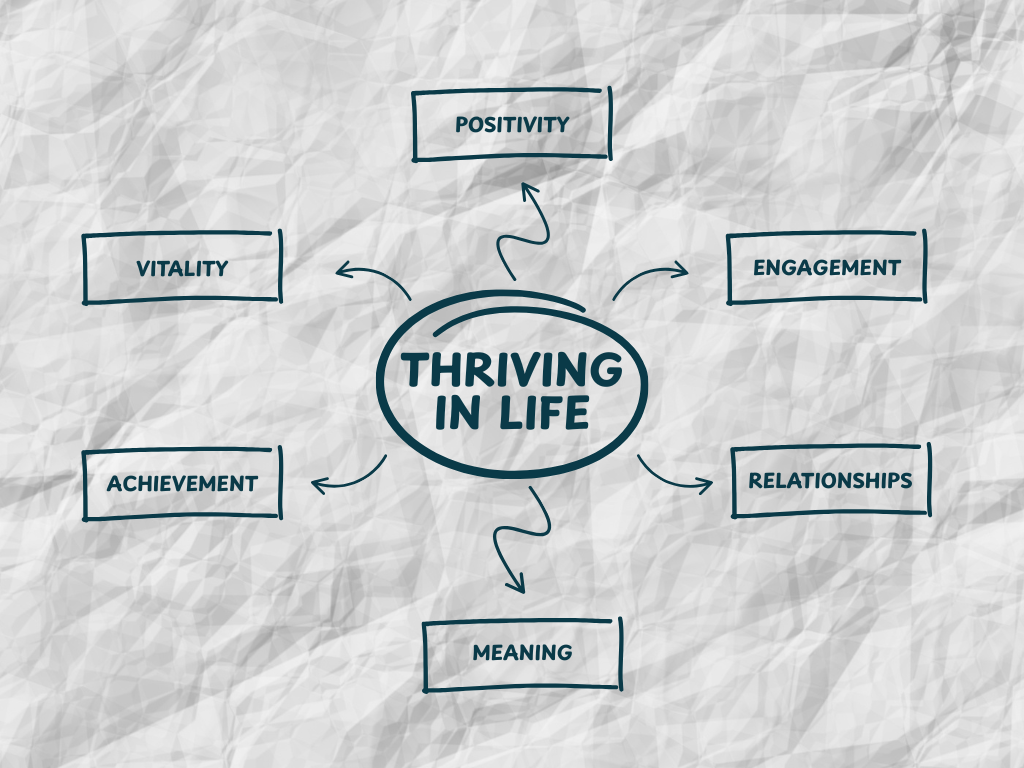
The 6 Pathways to Thriving:
A Practical Guide for Busy Adults (What you should know about PERMA-V)
If you’re working, caring for children or ageing parents, and trying to stay sane in between, 'thriving' can sound like a luxury word.
Most days are about getting through.
Yet research in positive psychology shows something important: thriving isn’t about adding more to your plate. It’s about strengthening the right things.
The model of human flourishing, called PERMA was developed by Martin Seligman* and then further advanced by other academics, such as my former tutor, Emiliya Zhivotovskaya, integrating the 6th element, vitality.
The final model is called PERMA-V, it outlines six pathways that support sustainable wellbeing and flourishing in life: Positivity, Engagement, Relationships, Meaning, Achievement, and Vitality. Together, they create a balanced framework for progress that you can apply both at work and in your home life.
Let’s look at what this means in real terms for busy adults.
1. Positivity: Not forced cheerfulness, but perspective
Positivity isn’t about ignoring stress. It’s about widening your lens.
When your day is full of logistics, deadlines, and emotional labour, your brain naturally scans for problems. That’s normal. But if you only notice what’s wrong, exhaustion grows faster.
A practical shift:
-
End the day by naming one thing that went well.
-
Start a meeting by acknowledging a small win.
-
Ask yourself, 'What is working here?'
These micro-moments of perspective build emotional resilience. Not because life is perfect but because it’s rarely all bad.
2. Engagement: Protecting focus in a distracted world
Engagement happens when you are absorbed in something that stretches you just enough.
But modern work culture rewards constant responsiveness, not depth. Add caregiving responsibilities, and deep focus feels almost impossible.
Instead of aiming for hours of uninterrupted flow, try:
-
One 45-minute 'deep work' block per week;
-
Turning off notifications during a key task;
-
Choosing work aligned with your strengths when possible.
Engagement restores motivation. It reminds you that you’re capable (not just busy).
3. Relationships: The quiet energy source
When responsibilities increase, connection often decreases.
Mid-career professionals can feel surprisingly isolated, managing teams at work and families at home, yet rarely feeling supported themselves.
Thriving doesn’t require more networking. It requires:
-
One meaningful conversation a week.
-
Expressing appreciation intentionally.
-
Asking for help before you’re depleted.
Strong relationships act as emotional shock absorbers. They protect your wellbeing under pressure.
4. Meaning: Remembering why it matters
When tasks pile up, meaning gets buried.
Meaning is the sense that what you do contributes to something larger than yourself; it could be about your family’s stability, your team’s growth, or a mission you care about.
Try this:
-
Ask yourself: 'Who benefits from my effort?'.
-
Connect daily tasks to a bigger purpose.
-
Clarify one value guiding your choices this month.
Meaning transforms obligation into contribution. It reduces resentment and increases direction.
5. Achievement: Progress over perfection
High-achieving adults often discount progress because it wasn’t flawless.
But research shows that recognising incremental wins builds confidence and momentum. Achievement isn’t just promotions or milestones; it’s about movement, progress in the right direction.
Instead of asking, 'Did I do everything?' try 'Where did I show up well?'
Tracking small progress counters stagnation and fuels growth (especially in seasons when capacity fluctuates)
6. Vitality – The foundation that is the easiest to ignore
Vitality underpins everything.
Without energy, positivity feels forced. Engagement feels impossible. Relationships feel draining.
Yet vitality is often the first thing sacrificed when facing busy schedules and mounting tasks.
For adults with multiple responsibilities, vitality doesn’t require a wellness overhaul. It might look like:
-
A 10-minute walk between meetings.
-
Protecting a consistent bedtime.
-
Setting a micro-boundary around e-mailing.
Remember, energy management is a performance and a self-care strategy, not indulgence.
Thriving Is Not About Doing More
The power of PERMA-V lies in balance.
You don’t need to maximise all six pathways at once. You simply need awareness.
Ask yourself:
-
Which pathway feels most neglected right now?
-
Which one, if strengthened slightly, would create the biggest shift?
Thriving isn’t about perfect equilibrium. It’s about intentional adjustment.
Choose one pathway this week. Strengthen it gently. Observe what changes.
Sustainable progress, at your work and your home life, starts here.
References:
*Seligman, M. E. P. (2011). Flourish: A visionary new understanding of happiness and well-being. Free Press.